So it was time to rack the Dandelion Wine this week! Hard to believe two months has gone by already! I just wanted to post a couple pictures of how it's looking. It has REALLY cleared up a lot. In the second picture you can see my hand through the wine. So it got racked into another clean carbouy and another crushed Campden Tablet was added. It should continue to fall even more clear as time ticks on and more sediment falls to the bottom. I'll be racking the wine again in two more months...Keep an eye out!!
A view into the world of our little family farm in rural Ohio, along the scenic Big Darby Creek.
Saturday, July 28, 2012
It's Tomato Time!!
Hello everyone! It's been way too long since we got a post up here. Please believe me when I say we've been quite busy around here. Children, market commitments, garden work. Oh, and did I mention that being 8 months pregnant in the summer heat wears you out?! Anyways....We have heirloom tomatoes now!!! I am so excited. Every year we wait and wait for the middle of summer to arrive here at our house because that means we don't have to buy the cardboard-like ones from the store anymore!! Here is a large basin of them I brought in a couple days ago. These were the first of the season! And since we do only grow heirloom there are many colors, sizes, and shapes.
Here is what may be my all-time favorite tomato...the Black Pineapple or Ananas Noir. It may not be the prettiest of tomatoes, but the flavor and texture are unbelievable. When you slice into it it has this pretty assortment of green, red, and almost purple stripes. This is the fourth year I've grown this tomato and I intend to for now on.
This is a Green Pineapple. It is in fact green when ripe. It does gain a slightly yellow tinge once it's ready to come off the vine. It's a nice little trick to know. It's almost neon green on the inside and so sweet with a nice amount of tang.....a real keeper.
The tomato on the right is a Costoluto Genovese and the tomato on the left is a Japanese Black Trifele. The JBT is slightly pear shaped and more of a purple/brownish color. Like so many of the purple family tomatoes is has a wonderful deep, smoky, wine like taste almost. So very good.
These are just few of the many tomatoes we'll have this year. We even have white tomatoes...yes white!! Come see us at the Grandview Farmers Market over the next weeks for some of these beauties. Take care everyone!
Monday, July 2, 2012
Potatoes Part One
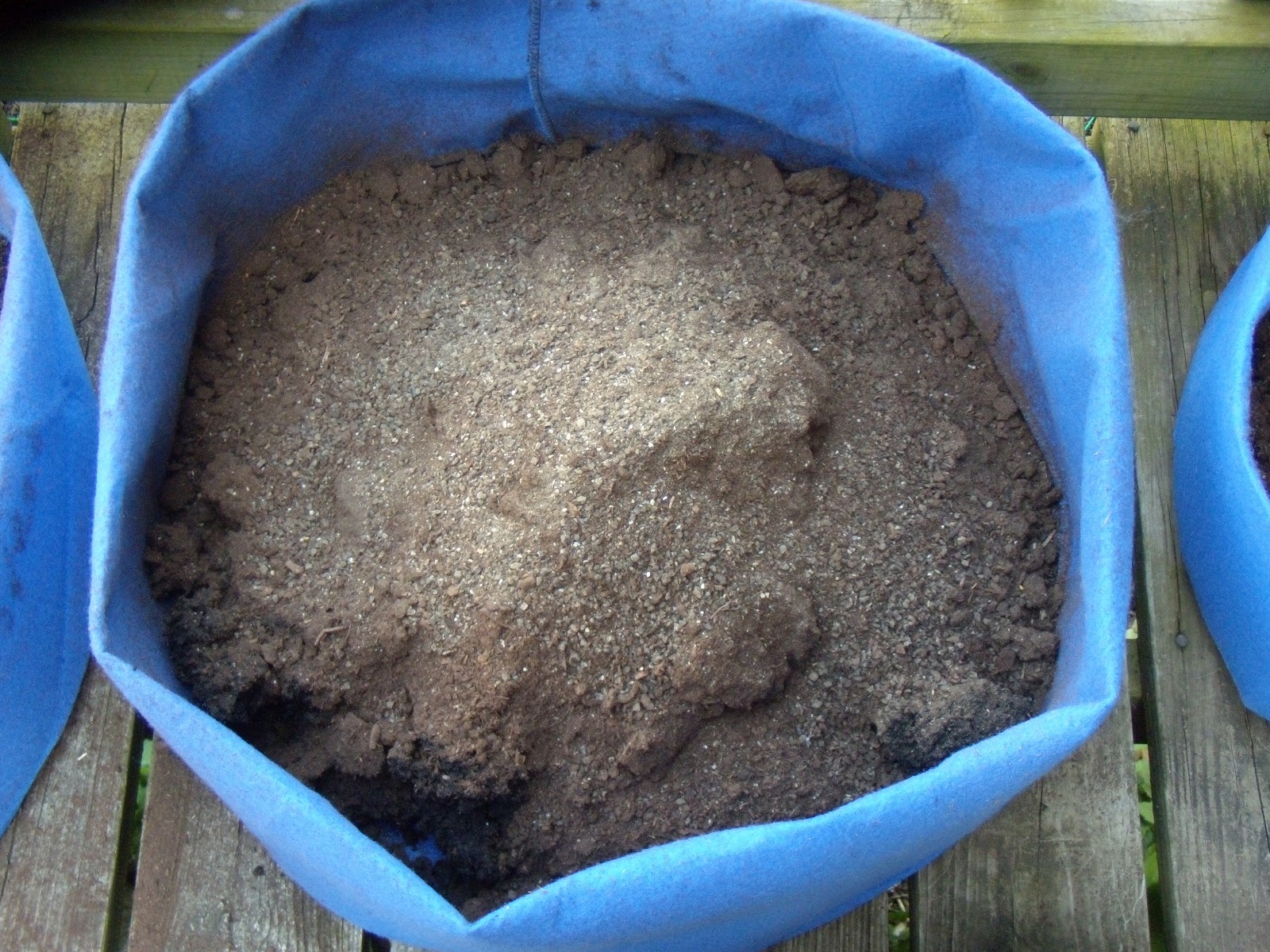
I decided to give potatoes another go this year. I never seem to have much luck growing them despite soil amendments, growing techniques, etc. I always ended up with hardly any potatoes that were small and just not that great. This year I decided to try to grow them in large fabric-like bags specifically designed for growing potatoes. They are the Jumbo Potato Bags from Gardener's Supply Company. The reviews were quite good and apparently people get nice potatoes out of these things! So off I went to get some good organic fertilizer, soil to fill the bags, and of course my seed potatoes. I decided to grow four varieties this year, Kathadin (white), Red Pontiac (redskin), Yukon Gem (yellow), and Purple Majesty (purple-skinned). The idea of these bags is you start by putting about 4 inches of your soil into the bags along with about a cup of fertilizer. The sides of the bags have been folded down half way and as the potatoes grow they get unfolded. They're made out of this polyester felt-like material that allows for water drainage and soil aeration. I got them in blue...my favorite color. Here is the soil/fertilizer mix. I used a good quality top soil/compost/peat mixture I mixed myself.
I just mixed all this together and smoothed it out. Then I put all the seed potatoes in the bags. Think about if you've left a bag of potatoes from the store in the cupboard for too long. You come back to them eventually and they've all sprouted. Well, these are now seed potatoes and you could plant those for new potatoes a few months later if you wanted to! Here is my very dirty hand holding one on the Purple Majesties. Even the sprouts on it are purple!
So, I got all the potatoes arranged in the soil so they weren't too close to each other. Here you can see what they looked like before I covered them with the next layer of soil.
The potatoes at this point were ready to be covered with another 4 inches of soil. Again some organic fertilizer was mixed in. Potatoes like to feed! Not too much nitrogen though. You'll get a lot of green leafy growth, but you won't get too many potatoes. The instructions that came with the growing bags said that for every eight inches of leafy growth add four more inches of soil until you've filled the bags with soil. So that's what I did until the bags were full! The potatoes poked their leaves out of the soil within a few days and they've just grown at warp-speed since then. I should add that I got them planted back on May 14. They finally seem to have leveled out now here that it's July as they're putting all their energy into growing new potatoes. Or that's what SHOULD be happening! Here they are a couple days ago.
Once the tops have basically died down it'll be time to dump out the bags and unearth what I'm hoping will be a lot of nice colorful potatoes! Obviously I'll be sure to get pictures and let everyone know how this experiment in potato growing goes. Keep your fingers crossed for me!
Tuesday, June 26, 2012
Combing Wool for the Wheel
There are some out there who take the locks of fiber directly and spin them from there. No way, Jose! You'll most likely have knotted/felted areas, bits of debris...not for me personally as this is hard to work with. There are predominantly two ways to get your wool/fiber ready to spin after it's been cleaned, carding and combing. Each method produces a different type of yarn when spun. Carding produces fibers going in every which way that are spun into woolen yarns. These yarns have a lot of air between the fibers and have a soft springy feel to them. These yarns are used for garments and most day to day projects. Combing produces fibers lined up parallel to each other and are spun into worsted yarns. Now I should say there is a yarn weight called worsted also, but they are two separate things. Yarns spun worsted style show off the natural luster of the fibers and are quite strong. This type of yarn is good for hardwearing items and garments. They are well suited for weaving, too. I personally use large English Combs. They are big, sharp, and potentially very dangerous if not used correctly. I make sure my kids are either asleep or secure in the next room when I'm working with them. Now, I do have hand cards and I do use them from time to time. Here is a really good link showing how to use hand cards. If I have short fibers to work with, my hand cards just work better. Now to start, I anchor the combs to a table using C-clamps. Here you can see what the combs look like.
Like I said...big and sharp! Each comb has a large wooden guard that stays on the sharp tines when not in use. Now you take your locks of fiber and lash them onto the anchored comb. This is called the stationary comb. Here is some Lincoln Longwool fiber from Gandalf that I dyed with Kool-Aid and food colors. You can see how I do this here. You want to make sure you're lashing the fiber on from the same direction. I always lash on the butt end of the fleece. This is the end that was closest to the animal when it was shorn off. Fill the comb all the way across and about 1/3 of the way up the comb. Much more than this and it can be difficult to work the fleece well.
Now you turn the stationary comb so the tines are pointed to the right. You take your other comb and VERY CAREFULLY swing it downward starting at the outside edge of the fiber. With each pass you pick up more and more of the fiber and you move closer and closer towards the stationary comb. Once you have transfered the fiber from the stationary comb to your moving comb it's time to transfer the fleece back to the stationary comb.
You VERY CAREFULLY swing the moving comb from right to left starting at the outer edge of the fiber. Again, with each pass you'll be transfering more and more of the fiber to the stationary comb. Repeat these two steps until the fleece is nice and open and clean.
Turn your stationary comb so the tines are pointing up again like they were when you started. Smooth the fiber with your hands to bring the fleece to a point. Now you'll be pulling off the fleece to form top. Top is what you spin. It's a long continuous strip of combed fiber.
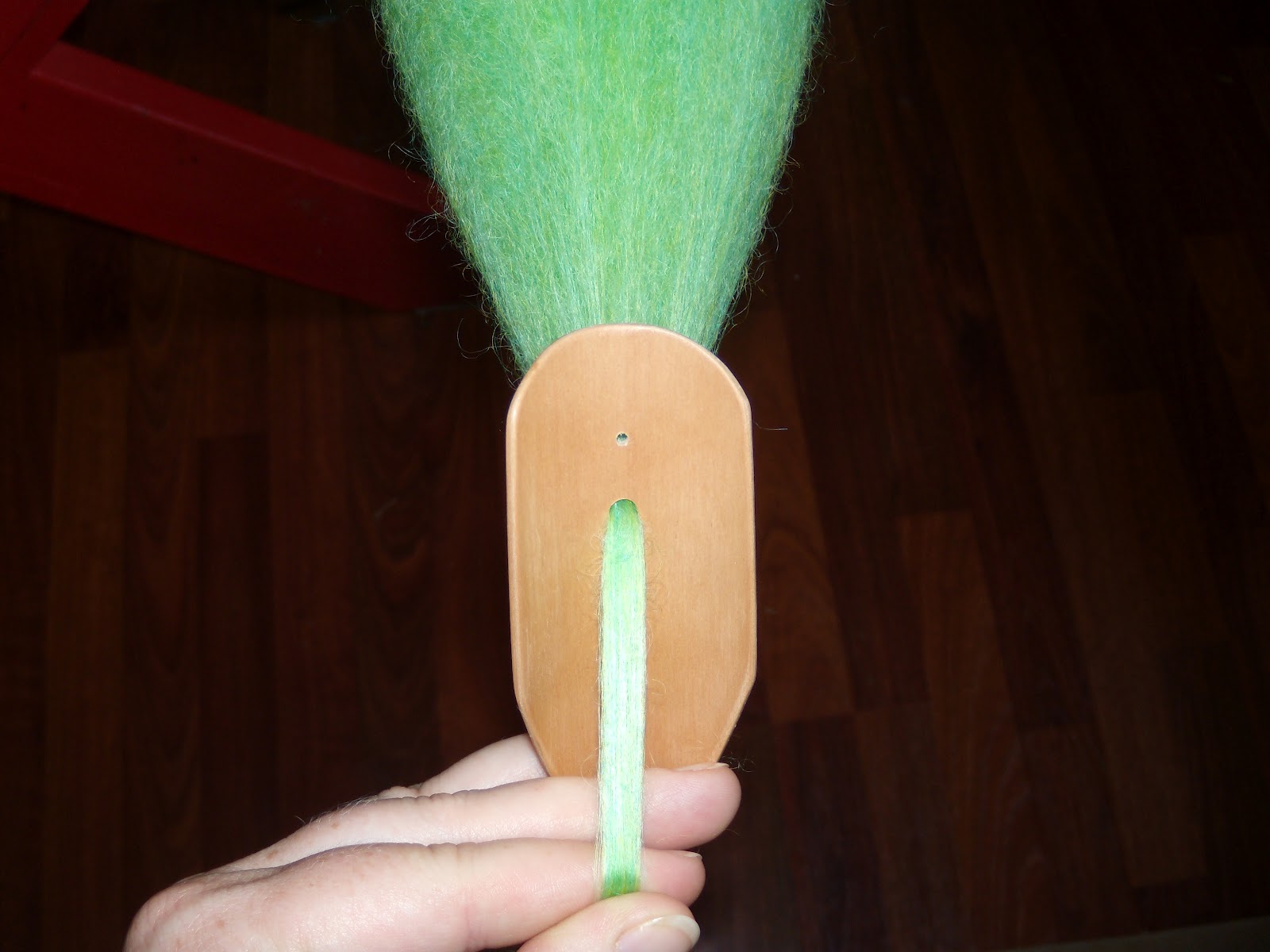
From here you can either pull the fleece off to form top completely by eye, or you can use a diz. A diz is a small device made from many different materials...wood, plastic, cardboard, even stone. I've seen a lovely one made out of Mother of Pearl before. The diz has a hole in the center that helps you to pull off the top more evenly. As you pull the fleece through you move the diz closer to the stationary comb. The longest and strongest fibers will be pulled through while the short fibers, noils, dirt and debris will be left behind on the stationary comb. Now, I was taught that you waste nothing when it comes to your fiber. I take the "trash" fiber that's left behind and clean it up by hand to use for our felted soaps! It's a great way to use wool or other fiber that would otherwise probably end up in the trash.
Once you've pulled off all the fiber you'll have a nice long strip of top that's ready to be spun into lovely worsted yarn! I gently roll the top around my hand to make a nice and tidy "ball" of top that easily unrolls as I use it at the spinning wheel.
Now all I need to do is get Matthew to take some pictures of me spinning so I can explain how that part of the process is done! It's hard to get decent photos of yourself while spinning. Believe me, I've tried. I promise to have that sometime soon!
Thursday, June 7, 2012
Getting the Garden In!
We have been pretty busy around here getting the gardens prepared and planted. I feel like there are just never enough hours in the day to accomplish all that needs done. I know I'm not alone in this feeling! Every year once May and June rolls around it just seems like everything else comes to a giant halt and the main goal is to get things planted and maintaining the gardens. A lot of what we produce I preserve by canning and freezing for us. We try to produce and save as much of our own food as we can. The rest, which is still a large amount on a good year, goes to market with us on Saturdays. We decided to stick to more of what we always grow. The old saying "If it ain't broke don't fix it." comes to mind! Multiple varieties of heirloom tomatoes, squash, green beans, cucumbers, and sweet/hot peppers can all be found growing, as well as some other wonderful vegetables. This year I was able to get my hands on the infamous Bhut Jolokia or Ghost chili pepper seeds. This is apparently one of the hottest peppers known and comes from the region around India. We also have Fatalii and Carribean Red Habanero Peppers this year, too. We seem to have this thing about really hot peppers. I mean, yeah we're chili heads, but come on!! If you like it hot, come see us at market and we can fix you up!
Getting the gardens prepared is no small task. This year we invested in a moldboard plow to really help dig deep and get the rich soil turned over. It also seems to have helped bury a lot of the weed seeds. We try to avoid plowing/tilling too much as we don't like to disturb the soil ecosystem anymore than we have to, but we do give it a good going over at the beginning of each season. Here is my brother Josh breaking in the plow. It was like he had done it one-hundred times before!
A week later Matthew went over the turned over soil with a walk-behind tiller. This was a massive undertaking. The moldboard plow leaves giant mounds and dips of soil that need to be smoothed out. Matthew certainly got a good workout fighting his way through it all.
Ronan had a great time playing in the freshly tilled dirt that day.....
Willow spent the entire time picking "flowers." In this case it was some type of yellow-flowered weed that was blooming like mad. I told her she could pick all of the yellow flowers she wanted and I tell you what...she picked every single yellow flower she could find! Here she is with flower smeared on her face and eyes closed for the camera...typical Willow.
So now we can fast-forward to the last few days. I've spend many long hours outside getting plants in the ground so they can start growing. The warmer spring we've had this year has been quite beneficial in many ways, one being that we were able to work the gardens sooner. Last year I wasn't able to get the tomatoes or peppers in the ground until after June 1 because it was so wet for so long. The plants were pretty sad by that point and they never did fully recover. This year I have had some of the best looking transplants I've ever had. I think this is in no small part due to the generous sun and early mild temperatures we've been blessed with. This morning when I went to let the chickens out I snapped a couple pictures of what things are looking like now. Here is what the main garden looks like at this point. Give it a few weeks there will be a lot more green in this picture as things grow bigger and bigger!
This is a portion of our tomatoes and "greens." Putting up the tomato tee-pees is always A LOT of work, but we always have the nicest tomatoes when we use this system. Each stake gets one plant and I just tie the plant up as it grows. I don't do too much pruning either. This is just my preference. I'll sacrifice a little fruit size to have larger yields. Needless to say I get some sprawling branches despite my best efforts to keep them all up off the ground!
Here's a lovely young Lacinato Kale plant. It produces lovely dark blue-green leaves that are just packed with nutrition.
Getting the gardens prepared is no small task. This year we invested in a moldboard plow to really help dig deep and get the rich soil turned over. It also seems to have helped bury a lot of the weed seeds. We try to avoid plowing/tilling too much as we don't like to disturb the soil ecosystem anymore than we have to, but we do give it a good going over at the beginning of each season. Here is my brother Josh breaking in the plow. It was like he had done it one-hundred times before!
A week later Matthew went over the turned over soil with a walk-behind tiller. This was a massive undertaking. The moldboard plow leaves giant mounds and dips of soil that need to be smoothed out. Matthew certainly got a good workout fighting his way through it all.
Ronan had a great time playing in the freshly tilled dirt that day.....
Willow spent the entire time picking "flowers." In this case it was some type of yellow-flowered weed that was blooming like mad. I told her she could pick all of the yellow flowers she wanted and I tell you what...she picked every single yellow flower she could find! Here she is with flower smeared on her face and eyes closed for the camera...typical Willow.
This is a portion of our tomatoes and "greens." Putting up the tomato tee-pees is always A LOT of work, but we always have the nicest tomatoes when we use this system. Each stake gets one plant and I just tie the plant up as it grows. I don't do too much pruning either. This is just my preference. I'll sacrifice a little fruit size to have larger yields. Needless to say I get some sprawling branches despite my best efforts to keep them all up off the ground!
Here's a lovely young Lacinato Kale plant. It produces lovely dark blue-green leaves that are just packed with nutrition.
As I was walking out of the garden I spotted this tomato plant with flowers in bloom!! This is wonderful because it means the first of the tomatoes aren't too far of. I can not wait...
I like to intermingle flowers in my gardens along the veggie plants. Some flowers can actually help ward off certain pests you don't want in the garden. I thought this little lady was just too pretty to not share. This is an heirloom flower called Zebrina. Such pretty colors on a easy to care for plant. Imagine a small version of a hollyhock...
The sheep couldn't help but notice me while I was out and decided to come and say hello. Well, it was actually more of a "Are you going to give me some sweet feed?" kind of greeting. They are now permanent additions here I'm glad to say. Matthew had to get the fencing finished before we were able to move them up here from my mom's barn. So now the sheep are here and the goats are at her house. Matthew and I have decided that we do want to get a couple weeder goats just to help maintain the lot. It's really big for just two sheep! It's nice to have livestock back here on the farm. I'll leave you with a picture of my two balls of fluff! Until next time!
| Gandalf and Raziel |
Tuesday, May 22, 2012
Rachel's Wheat Sandwich Bread Recipe
We eat a lot of bread. I mean, A LOT of bread! Maybe it's the fact that we have two small children and sandwiches are such an easy go-to for lunches and many snacks in between. Maybe it's because bread goes so well with so many things I cook for my family. Maybe it's because there is just something about fresh bread that triggers this wonderful feeling of nostalgia. I really don't know. I have been making bread for a long time. To start it was just because I wanted to and I missed having fresh, homemade bread around. My dad made wonderful breads all the time while I was growing up and I was use to having them. His Thanksgiving dinner rolls will be painfully missed this year. These days I make bread for my family twice a week. It's on my "chores" list but I really don't consider it a chore at all.
Here in America there does not seem to be the same importance placed on bread as in so many other countries. You would be hard pressed to find a French, Italian, or any European table that didn't serve some form of bread with meals. Bread is made fresh and eaten fresh in so many these countries daily. People go to their bakeries everyday for their daily bread. Of course, many households make their own, too. In the Middle East, bread is an absolute staple. Hummus and Baba would not be the same without delicious soft pita bread. It is the constant, unchanging absolute to food and mealtimes in so many nations around the world.
A lot of people seem scared to attempt to make bread for some odd reason. Maybe it's all the steps involved or the fear of doing something wrong. Perhaps it's the fact that most people today just head to their local grocery store where they can buy a loaf for next to nothing. Well, I don't know about you, but the last time I picked up a loaf of your standard store-bought bread I couldn't even pronounce half of the ingredients that were listed! I really don't want to be eating all those chemicals nor do I want my children to be eating them either. I was taught a long time ago to never eat something if you can't even pronounce what it's made of. To top it off, if you want to buy the higher-quality bread that does have the simple list of ingredients, you're going to pay somewhere along the lines of $4.00!! I can buy a whole bag of really good flour for that much and it will make MANY loaves of wonderful, good-for-you bread.
Today I wanted to share with you my recipe for the wheat bread that I bake. This is my own recipe I'm proud to say! It makes two loaves of sandwich style bread. I have other recipes I use for crusty bread and grain-type bread, but this is the one I use by far the most. I've gone through a lot of recipes to figure out what I like and what I think needs improvement. I finally came up with this recipe. Now I will say, it is not 100% whole wheat. I'm sorry, I just CAN NOT find nor create a bread from all whole wheat that doesn't have a residual cardboard-like texture! Believe me, I've tried. Bread has to have at least some soft chewiness to it! I did still want the healthy qualities that whole wheat has to offer though. I finally decided on half bread flour and half whole wheat flour. Now if you are someone who just can not stand the texture of true whole wheat, you can substitute white whole wheat flour instead. I also wanted to incorporate the wonderful raw-honey from our bees into the bread. You can feel free to tweak the amounts of honey and salt if you so choose, but I think it's a pretty good balance. Please give it a try and I really do hope you like it as much as we do. Now for the recipe.....
Rachel's Wheat Sandwich Bread
1 1/2 Tablespoons Active Dry Yeast
2 Cups Warm Water (~110℉)
1 Tablespoon Sugar or Honey
1/2 Cups Vegetable Oil
3 Cups Bread Flour
3 Cups Whole Wheat Flour
1/3 Cup Pure Raw Honey
3 Teaspoons Salt
First you need to dissolve the sugar/honey into the warm water. Add the yeast, stir to dissolve, and allow it to "proof." This is when the yeast starts to foam and get all puffy. The yeast feeds on the sugar in the water. Just leave it alone and let it go, don't be tempted to stir it. It can take about ten to fifteen minutes for the yeast to get there depending on how warm your kitchen is at the time.
Here is what proofed yeast looks like. You can see the foamy layer on top of all the liquid.
While your yeast is proofing, measure out your flours and combine them in a large bowl. Make sure that you get a high-quality flour and please be sure that it is unbleached and unbromated. Bromine depletes your body of Iodine, a vital nutrient your body needs, ESPECIALLY your thyroid gland. I spoon the flour into my measuring spoon and then level it off with a knife. I have been told that next to weighing out your flour, this is the best way to get an accurate measure.
Now I will admit, I use my KitchenAid stand-mixer these days to work and knead my dough. I have done it by hand though many times! Oh gosh.....countless times! I hand-kneaded every dough I made up until I was gifted my mixer two years ago. It's a great workout and there is something more "authentic" about hand-kneading I think, but boy, it sure is quicker and easier with a stand-mixer! Add the salt to the flours and stir well to get the salt well combined.
Add the honey to the flour mixture. My honey had crystallized so if you're wondering why it looks a little odd, that's why. By now your yeast should be ready. Add the oil to the yeast and give it a stir. You now pour the yeast and oil into the bowl with the flour and honey.
Combine these ingredients well and continue to knead until the dough becomes smooth and elastic. If you're kneading my hand make sure you work on a nicely floured surface as this dough is on the stickier side. You may think the dough is too wet, but it seems that the extra bit of moisture helps the bread stay nice and moist during the baking.
Because this dough is a bit sticky, I use an oiled spatula to help scrape it out onto a floured surface.
Lightly oil a large bowl ( I use the same workbowl it was mixed in.) and turn the dough-ball over in it to lightly cover it all with oil. Leave it in the bowl and cover with plastic wrap. Place the bowl in a dark, warm area to rise. You really want your room to be at least 72℉. Yeast likes warmth and it helps it work better. If it's too cold, it may not activate at all. It can take from one to two hours for the dough to fully rise. For me, it is generally closer to two hours. You want the dough to double in size. If you're just not sure, one way to check if the dough has risen enough is to poke your index finger into the dough and pull it out. If the dough at the indentation basically stays in place it's ready. A tiny bit of give is okay. If it starts it close back in it needs a little more time. Below you can see the dough before and after it's first rising. You can see the size difference.
Once they get into a hot oven they puff up a bit more during the first ten minutes or so. It's kinda neat to walk away only to return a few minutes later to see this bread all puffed up. Meanwhile, while the bread is about done with it's final rise, heat your oven to 350℉ and place a rack in the middle of your oven. Once they're ready, place the loaves in the hot oven and bake for 30-35 minutes or until the tops are a nice golden brown. Make sure to leave a couple inches between the two loaves while they bake or the tops will fuse together as they puff up! The smell will be amazing, almost nutty thanks to the whole grain in the bread.
Let the bread sit in the pan for ten minutes or so and then remove the loaves from the pans being very careful not to burn yourself because they are still very hot! Put the bread on a rack to finish cooling. Now if you're like Matthew, the kids, and I, you won't and can't wait until it's totally cooled. Fresh hot bread with real butter is up there on my list of favorite things. I put each loaf in their own bag. One I leave on the counter for us to eat right away and the other I place in the refrigerator to keep it fresh until we need it. If it's going to be awhile until you eat it, bag it well and put it in the freezer. Just pull it out in time for it to thaw and enjoy!
And there you have it, the bread I make all the time. I do hope you give it a try and if you have any questions or need something explained more, please just ask! Sometimes I think I've explained something well when in reality it's only so-so. I will be glad to help however I can!
Here in America there does not seem to be the same importance placed on bread as in so many other countries. You would be hard pressed to find a French, Italian, or any European table that didn't serve some form of bread with meals. Bread is made fresh and eaten fresh in so many these countries daily. People go to their bakeries everyday for their daily bread. Of course, many households make their own, too. In the Middle East, bread is an absolute staple. Hummus and Baba would not be the same without delicious soft pita bread. It is the constant, unchanging absolute to food and mealtimes in so many nations around the world.
A lot of people seem scared to attempt to make bread for some odd reason. Maybe it's all the steps involved or the fear of doing something wrong. Perhaps it's the fact that most people today just head to their local grocery store where they can buy a loaf for next to nothing. Well, I don't know about you, but the last time I picked up a loaf of your standard store-bought bread I couldn't even pronounce half of the ingredients that were listed! I really don't want to be eating all those chemicals nor do I want my children to be eating them either. I was taught a long time ago to never eat something if you can't even pronounce what it's made of. To top it off, if you want to buy the higher-quality bread that does have the simple list of ingredients, you're going to pay somewhere along the lines of $4.00!! I can buy a whole bag of really good flour for that much and it will make MANY loaves of wonderful, good-for-you bread.
Today I wanted to share with you my recipe for the wheat bread that I bake. This is my own recipe I'm proud to say! It makes two loaves of sandwich style bread. I have other recipes I use for crusty bread and grain-type bread, but this is the one I use by far the most. I've gone through a lot of recipes to figure out what I like and what I think needs improvement. I finally came up with this recipe. Now I will say, it is not 100% whole wheat. I'm sorry, I just CAN NOT find nor create a bread from all whole wheat that doesn't have a residual cardboard-like texture! Believe me, I've tried. Bread has to have at least some soft chewiness to it! I did still want the healthy qualities that whole wheat has to offer though. I finally decided on half bread flour and half whole wheat flour. Now if you are someone who just can not stand the texture of true whole wheat, you can substitute white whole wheat flour instead. I also wanted to incorporate the wonderful raw-honey from our bees into the bread. You can feel free to tweak the amounts of honey and salt if you so choose, but I think it's a pretty good balance. Please give it a try and I really do hope you like it as much as we do. Now for the recipe.....
Rachel's Wheat Sandwich Bread
1 1/2 Tablespoons Active Dry Yeast
2 Cups Warm Water (~110℉)
1 Tablespoon Sugar or Honey
1/2 Cups Vegetable Oil
3 Cups Bread Flour
3 Cups Whole Wheat Flour
1/3 Cup Pure Raw Honey
3 Teaspoons Salt
First you need to dissolve the sugar/honey into the warm water. Add the yeast, stir to dissolve, and allow it to "proof." This is when the yeast starts to foam and get all puffy. The yeast feeds on the sugar in the water. Just leave it alone and let it go, don't be tempted to stir it. It can take about ten to fifteen minutes for the yeast to get there depending on how warm your kitchen is at the time.
Here is what proofed yeast looks like. You can see the foamy layer on top of all the liquid.
While your yeast is proofing, measure out your flours and combine them in a large bowl. Make sure that you get a high-quality flour and please be sure that it is unbleached and unbromated. Bromine depletes your body of Iodine, a vital nutrient your body needs, ESPECIALLY your thyroid gland. I spoon the flour into my measuring spoon and then level it off with a knife. I have been told that next to weighing out your flour, this is the best way to get an accurate measure.
Now I will admit, I use my KitchenAid stand-mixer these days to work and knead my dough. I have done it by hand though many times! Oh gosh.....countless times! I hand-kneaded every dough I made up until I was gifted my mixer two years ago. It's a great workout and there is something more "authentic" about hand-kneading I think, but boy, it sure is quicker and easier with a stand-mixer! Add the salt to the flours and stir well to get the salt well combined.
Add the honey to the flour mixture. My honey had crystallized so if you're wondering why it looks a little odd, that's why. By now your yeast should be ready. Add the oil to the yeast and give it a stir. You now pour the yeast and oil into the bowl with the flour and honey.
Combine these ingredients well and continue to knead until the dough becomes smooth and elastic. If you're kneading my hand make sure you work on a nicely floured surface as this dough is on the stickier side. You may think the dough is too wet, but it seems that the extra bit of moisture helps the bread stay nice and moist during the baking.
Because this dough is a bit sticky, I use an oiled spatula to help scrape it out onto a floured surface.
Lightly oil a large bowl ( I use the same workbowl it was mixed in.) and turn the dough-ball over in it to lightly cover it all with oil. Leave it in the bowl and cover with plastic wrap. Place the bowl in a dark, warm area to rise. You really want your room to be at least 72℉. Yeast likes warmth and it helps it work better. If it's too cold, it may not activate at all. It can take from one to two hours for the dough to fully rise. For me, it is generally closer to two hours. You want the dough to double in size. If you're just not sure, one way to check if the dough has risen enough is to poke your index finger into the dough and pull it out. If the dough at the indentation basically stays in place it's ready. A tiny bit of give is okay. If it starts it close back in it needs a little more time. Below you can see the dough before and after it's first rising. You can see the size difference.
Before
After
When the dough has finished rising you then punch the dough down. It will deflate back to it's original size. Knead the dough by hand a few times just to redistribute the yeast. Divide the dough into two equal pieces and shape them into loaves. Place each into a well buttered 9 by 5 inch loaf pan. I really recommend butter for this because for some reason it really does help the loaves come free from the pans after baking so much better than oil. Each time I have used oil in the past the bread sticks really bad. Just trust me on this one. I actually butter the tops of the loaves also because it helps give the bread this nice browned top during the baking process.
Again, cover the loaves with plastic wrap and place them in a nice warm, dark area. They now start their second rise and this generally takes 30 minutes to an hour. The loaves should rise to one inch above the pans. Here is what the loaves look like when they are ready to bake.Once they get into a hot oven they puff up a bit more during the first ten minutes or so. It's kinda neat to walk away only to return a few minutes later to see this bread all puffed up. Meanwhile, while the bread is about done with it's final rise, heat your oven to 350℉ and place a rack in the middle of your oven. Once they're ready, place the loaves in the hot oven and bake for 30-35 minutes or until the tops are a nice golden brown. Make sure to leave a couple inches between the two loaves while they bake or the tops will fuse together as they puff up! The smell will be amazing, almost nutty thanks to the whole grain in the bread.
Let the bread sit in the pan for ten minutes or so and then remove the loaves from the pans being very careful not to burn yourself because they are still very hot! Put the bread on a rack to finish cooling. Now if you're like Matthew, the kids, and I, you won't and can't wait until it's totally cooled. Fresh hot bread with real butter is up there on my list of favorite things. I put each loaf in their own bag. One I leave on the counter for us to eat right away and the other I place in the refrigerator to keep it fresh until we need it. If it's going to be awhile until you eat it, bag it well and put it in the freezer. Just pull it out in time for it to thaw and enjoy!
And there you have it, the bread I make all the time. I do hope you give it a try and if you have any questions or need something explained more, please just ask! Sometimes I think I've explained something well when in reality it's only so-so. I will be glad to help however I can!
Thursday, May 17, 2012
A Few of Our Yarns
I had promised I would post a picture of some of the yarn I spun up from the Kool-Aid/food color dyed fleece I had talked about earlier. Well, here you go! The pink toned yarn is a Lincoln/Mohair blend. The dark blue/purple blend is 100% Lincoln. The pretty aqua yarn is 100% Kid Mohair. It is SO SOFT! You could wear it directly next to your skin it is so downy soft. We are planning on selling these as well as many more of our yarns and prepared fibers at the Grandview Farmer's Market this summer. We are set to take part in two of the "pre-market" days in June. We have promised to be there June 9th and 30th. Market time is the normal 10am to 1pm. Hope to see you there!
We just added three new Angora goats to the farm roster. They are set to be getting sheared next week sometime so I'm going to have so much wonderful extra fiber! I'll be making some more blends and will also be spinning 100% Mohair yarns. Now all I need to do is find time! Lets see, I have soap to make, fiber to process and get spun, kids to chase, the gardens to get planted, weeding, house chores, the beginning of homeschooling.....oh, and at some point in there I need to try to eat and sleep! Life is busy around here right now. With a new baby set to arrive sometime in September I'm feeling extra squeezed for time this year. But you know, I wouldn't want it any other way. It's such a wonderful busy! Now speaking of fiber to process, I better get to it. Until next time!
Subscribe to:
Posts (Atom)